
Strengthening Health Systems in Falaba District, Sierra Leone

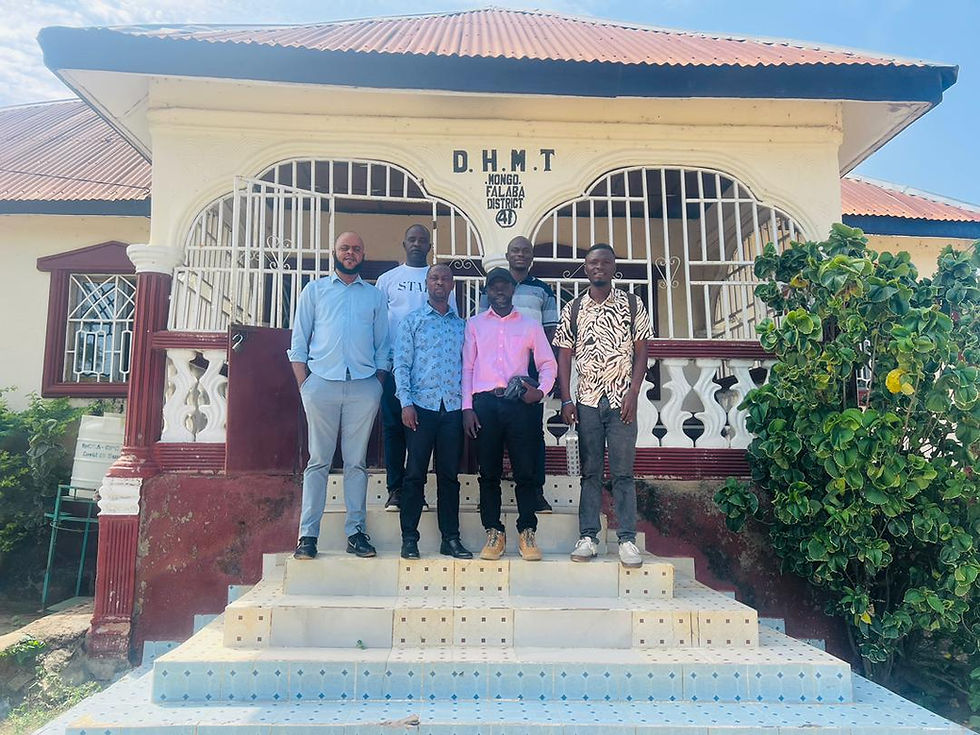
On July 28, 2026, Health Equity Acceleration Partnership Program Director Vamba Lolleh traveled to Mongo in Falaba District, Sierra Leone, to meet with Dr. Lavalie, District Medical Officer and head of the District Health Management Team. The visit focused on understanding Falaba’s most pressing health priorities and identifying areas where HEAP can provide practical, sustainable support.
Falaba is one of Sierra Leone’s more remote districts. Its challenging terrain, poor road network, seasonal migration, and movement across the nearby border with Guinea create health care challenges that cannot always be addressed through a one size fits all approach. During the rainy season in particular, difficult roads can delay or prevent ambulance transport between health facilities.
A District Focused on Maternal and Child Survival
The visit came as Falaba works to advance Sierra Leone’s 300 Days of Activism for Maternal, Newborn, and Child Survival, centered on the national “Triple Zeros” goals: zero preventable maternal deaths, zero preventable child deaths, and zero children who have received no vaccinations.
Dr. Lavalie and the District Health Management Team have translated these goals into a seven pillar strategy for Falaba, covering maternal survival, newborn and child health, immunization, infection prevention, community engagement, health system strengthening, and monitoring and accountability. Two of those priorities, stronger health systems and better use of data, closely align with HEAP’s work.

Seeing the Data Challenge Firsthand
At the Mongo Bendugu Community Health Centre, Vamba and Dr. Lavalie reviewed the paper registers currently used to document patient care and facility activity.
The visit highlighted an immediate opportunity. The District Health Management Team already has tablets that could potentially support digital data collection alongside existing paper records. A pilot could allow information entered at the health center to feed into a district level dashboard, giving health leaders a more timely view of what is happening across facilities.
Today, facilities report through Sierra Leone’s national DHIS2 system on a monthly basis. More frequent local review of those data could help district leaders identify problems earlier and respond before the end of the reporting month. HEAP and the district discussed the possibility of introducing regular data review meetings and using facility level information to identify areas needing action.

Closing the Referral Loop
The visit also identified a significant gap in the patient referral system.
When a patient is transferred from one facility to another, the facility that initiated the referral often does not learn what happened afterward. For a pregnant woman, for example, staff may not know whether she delivered safely, required a caesarean section, experienced complications, or survived.
A simple referral feedback mechanism could help health workers understand whether referrals are working and give district leaders better information for improving the system over time.
When Distance Becomes a Maternal Health Risk
The challenges of referral are particularly important because surgical deliveries are not currently available within Falaba District.
A surgical theater has already been constructed and some equipment is in place, but the district still lacks two critical resources: blood bank refrigeration and an anesthesia professional. As a result, women requiring caesarean sections must be transported by ambulance to another district over difficult roads.
For communities separated from higher levels of care by distance, terrain, and poor roads, strengthening local health systems is more than an administrative exercise. It can directly affect how quickly patients receive the care they need.

Building Solutions Around Local Priorities
The Falaba visit identified several areas for continued collaboration between HEAP and the District Health Management Team. These include piloting digital patient registers, establishing more frequent data review, improving referral feedback, engaging traditional birth attendants around earlier referral, and strengthening practices that can continue beyond the current 300 day campaign.
The next step is to turn those opportunities into achievable pilot activities developed together with district leadership. For HEAP, Falaba illustrates an important principle of digital health equity: technology is most useful when it responds to the realities of the health system and the priorities of the people who work within it.


Comments